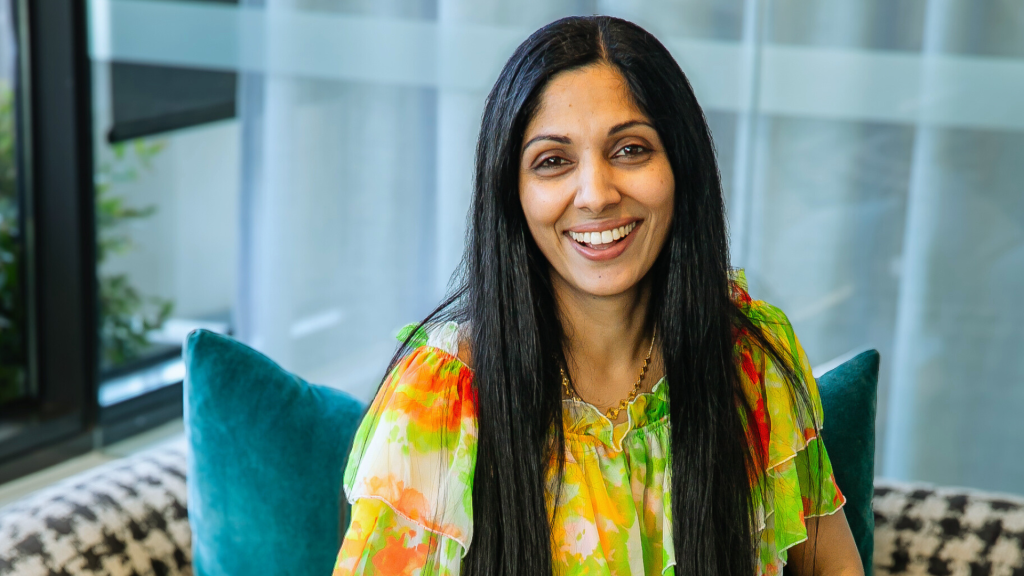
Priya Ravindra Kalyanimath is the founder and CEO of award-winning purpose driven company Punar. She has been advocating for gender diversity, inclusion, and equality for twenty years. Priya is an accredited Company Director, and she has served as an elected Board Member on two boards for over five years. Prior to her entrepreneurial journey, she has enjoyed a successful career in Project, Program and Portfolio management delivering multimillion dollar projects. Priya is a brilliant speaker and is the author of a best seller collaborative book “Voices of Influence: The untold stories of remarkable speakers”.
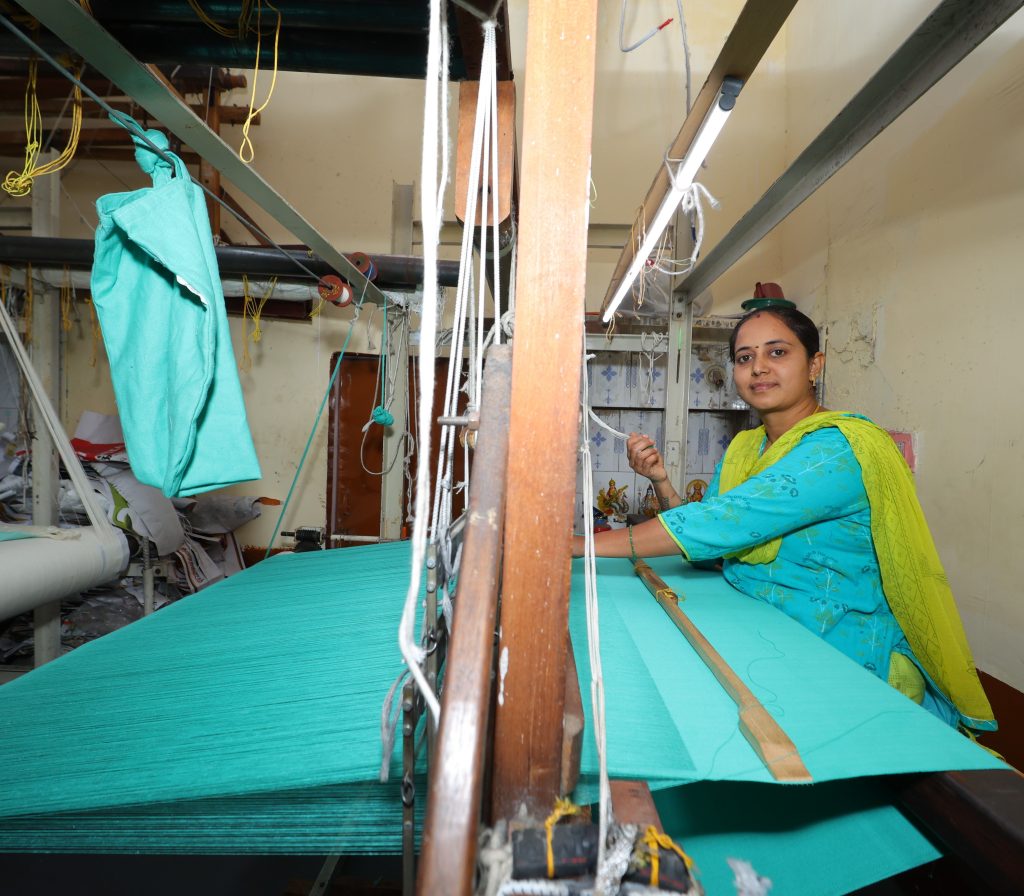
Priya’s life purpose is to lift women around her and by launching Punar she is aiming to bring this purpose to fruition. Punar artisans are predominantly women weavers in India, and they are paid fair wages, a good news story in the unregulated handloom textile industry. Punar is committed to equal pay and investing in women every day. Many artisans come from challenging socio-economic backgrounds, and they are provided safe and supportive careers. Punar means “again” in the Sanskrit language, true to the company ethos, providing an opportunity to start “again” for incredible women regardless of their challenging past.
Punar artisans ethically handcraft sustainable luxury gifts, custom-made branded merchandise and homewares. Punar is reviving handloom, which is a handwoven, zero-emission fabric-making technique with innovation. Punar uses recycled yarn that comes from upcycling landfill textile waste and the latest green textile technologies resulting in longer-lasting impactful products.
In the $242 billion gifting industry where 40% ends up back in the landfill, Punar is positively disrupting and infusing it with impacts. Every product is a symbol of hope, resilience and environmental stewardship. Companies that source Punar products have measurable impacts to report on their CSR and ESG goals.
What was the transition like for you from being in a corporate career to being an entrepreneur?
As an entrepreneur, we are required to wear multiple hats and this was certainly interesting as I come from project management where roles, responsibilities and team structures are often established. Projects are team work but with most startups, founders shoulder the majority of responsibilities.
Managing a budget is different too, as a founder we are often injecting our finances into startup funds. Keeping the emotions out, managing capital investment and business finances can be a delicate balance.
It is important to build a support network around. That’s why I am a member of women founder networks like your amazing network. I actively seek mentoring and I am always networking with like-minded individuals.
No two days can be the same – I acknowledge that having vision boards, roadmaps, quarterly and monthly plans are useful, but it is absolutely essential to be kind to ourselves, celebrate small wins and remember our whys. And, it is okay to ask for help!
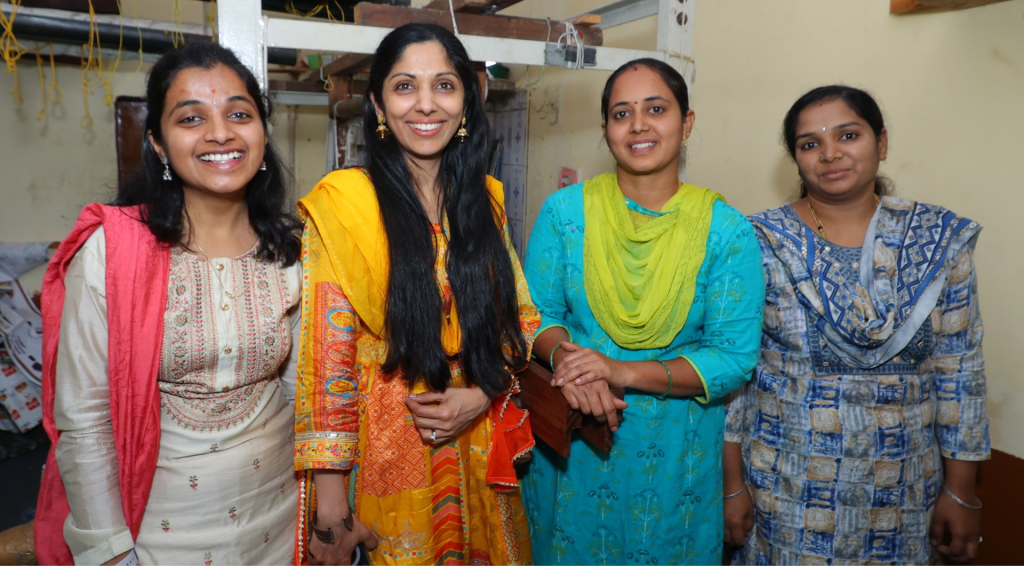
How has your upbringing in India influenced the values that you now hold dearly in both business and life in general?
I grew up in Southern India, my hometown is Mysore and I moved to Australia as a teenage student all alone to pursue undergraduate studies. I often spent childhood holidays visiting my grandparents in the bucolic Western Ghats and family coffee plantations. My parents and grandparents were kind, loving and supportive while instilling a work ethic and a strong moral compass.
I am grateful for my blissful childhood, but I was aware of the gender bias, inequality, and unfair practices in the communities around perpetuating gender imbalance. This always lit a fire inside me, I knew that this must change, I was never going to accept archaic tradition as an excuse for mistreating girls and women.
My moral compass and work ethic have only gotten stronger over these years. I am determined to do my bit in creating an equal and inclusive world where gender pay gap, respectful treatment of women and all humans are no longer topics of discussion.
What were some of the ways of doing business in Australia that you had to get accustomed to being a founder with a multicultural background?
As an Australian of Indian origin, I am incredibly grateful for my fellow kind and thoughtful Aussies who are supporting our journey in every possible way.
It is my observation that most conferences, networking events, lunch and learning sessions do not have adequate representation of women of colour. Am I saying that we are not doing anything about this? The answer is no – certainly not, but we need to keep this in mind until we achieve a culturally diverse and inclusive space for women of multicultural backgrounds.
I am proud of my cultural heritage. I am still learning to use my voice consistently when it comes to creating awareness about my culture, heritage and traditions. So, I am finding that as women of colour founders we must own the cultural education component. Most times people are unaware, however mutual respect, compassion and openness to holding dialogues can create strong bonds. I am thankful that I can weave my two homes together to create positive impacts!
Two key learnings:
Punar is a social enterprise, sometimes I am finding myself explaining that Punar isn’t a charity! Our women artisans work hard, and they are remunerated accordingly. We are handcrafting and selling incredible products. When did buying products made by women artisans become charitable donations? We don’t go buy milk and deem that as a charitable donation to farmers, do we? I find it interesting that women of colour owned social enterprises can be viewed with different lenses in the western world.
People admire colourful India however they do not realise India is one of the largest suppliers of sustainable handloom fabrics. There is an association of faster and cheaper production when it comes to “made in India ‘, not ethical and sustainable production. European brands are crowned as pioneers in sustainable luxury. In reality, many European and American brands source from India.
There is little transparency on the treatment of workers and supply chains but people are not aware of the greenwashing happening in the background. There is also cultural misappropriation where brands are using cultural and traditional designs as their own without acknowledging the real owners. I am determined to break this cycle – I am here to share our story of building an ethical business and showcase our artisans, give credit where it’s due.
Why do you think it’s so important to ensure that women are paid equitably and given equal opportunity regardless of their socio-economic and cultural backgrounds?
Paying people for their efforts, recognising, and rewarding their efforts are fundamentals of creating thriving communities. It is mind-blowing that in 2024 we are still demanding equal pay for equal work when it should be the norm.
We need to stop throwing around the word ‘women empowerment’. What we need is an inclusive and equitable society because when women are recognised and rewarded for their contributions, we are creating thriving communities.
In Australia, I have always wondered how men in power or any person feel when they find another person who is doing similar work getting paid 17% more than them? Will they quietly accept and move on or question? Then why is it when women demand equal pay for equal work they are often viewed as “hysterical women” “troublemakers” “difficult women”!!!
According to UN Women, closing the gender pay gap can boost the global economy by USD 7 trillion dollars. Research is repeatedly showing that women-led companies, and companies where diversity and diverse contributions are valued are consistently outperforming traditional organisations.
If we do not make space for women of all socio-economic and cultural backgrounds, we are missing out on what they bring to communities & countries.
I am going to add that countries around the world can look to Nordic nations when it comes to childcare, free education, and parental leave. We already know that on an average, women are doing 18 hours of unpaid domestic chores and carer duties every week. How can we possibly continue in this broken system? Male allies need to speak up more than ever and demand gender equality.
Don’t call us superwomen or super moms, just pay up and step up with your responsibilities.

What are the top 3 principles that you live by and that are non-negotiable?
Staying true to my purpose – no matter what happens when I follow my life purpose, I am conscious that I am making a real difference. Being my authentic self, I can do things that are meaningful and impactful for people and the planet. Following my life purpose makes me a better person.
Standing up for gender equality, diversity and equal pay – I will not stop taking action until we create a world where gender equality, equal pay, diversity and inclusion are no longer up for debate. Women and children are not objects or patriarchal properties, they are human beings. Everyone deserves to be treated with respect and kindness.
Gratitude and optimism – I start my day with gratitude practice and optimism. It doesn’t mean I am not aware of the current crisis and challenges facing our world but amidst chaos, I am choosing gratitude and hope as it fuels me to create a better future. I am grateful to be here, at this time and living my life’s purpose.
Follow Priya and Punar